

spiritual path : ค้นหาหนังสือธรรมะ หน้า 8 / 10
หน้าหนังสือทั้งหมด
194
Negative Effects of Misinterpreted News on Understanding Buddhism
Negative circumstances resulting from carelessly reading negative news
If parents do not teach their children to thoroughly analyze the truth in articles about monks, the children may thoughtlessly b
Neglecting to teach children how to analyze negative news about monks leads to misconceptions and misunderstandings about Buddhism and the law of Kamma. When children generalize that all monks are mor
82
Types of Meditation
78 MEDITATION
TYPES OF MEDITATION
Buddhist texts, such as the Visuddhimagga¹, describe forty different methods of practice. All of them have the same goal: to train the mind to be still and to attain
Buddhist texts, like the Visuddhimagga, outline 40 meditation methods with the same goal of mastering the mind to achieve Buddhahood. Meditation can be categorized into three types: positioning the mi
119
Exploring the Unknown Factor and the Eightfold Noble Path
Suzanne Jeffrey
"The students you are teaching now will be the politicians when you retire. If you do not teach them properly, then who is to blame? We are!! We are to blame because we are probably n
The content emphasizes the responsibility of educators to guide students, as they will shape the future. It discusses various perceptions of the Unknown Factor, including Nibbana, God, and Supreme Kno
129
The Formation of Habits and Teaching Morality
Suzanne Jeffrey
which will lead to destructive thoughts and eventually into darkness. So, as we can see,
different habits lead to different lives. All of our habits come from our early training.
“Ho
This text discusses how habits develop from early training and repeated actions, and emphasizes that both good and bad habits influence our lives. It highlights the need for teachers to first correct
133
The Importance of True Friendship and Self-Reflection
for who we are: Not in the mirror, but inside of our mind. If we focus on the external,
then defilements cloud our mind. We will develop false friendships and these are people
around you who have not
In our lives, we encounter both true and false friends. False friends can lead us down destructive paths due to their selfishness, insincerity, and lack of principles. They can contribute to societal
157
Understanding Dhamma and the Eightfold Noble Path
Sucone Jeffray
life, and depend on ourselves. They usually live for a really, really, really long time (like hundreds of thousands of years) until they deplete their good kamma.
Dhamma – (Sanskrit:
The text discusses the concepts of Dhamma, meditation, and the Eightfold Noble Path as essential elements leading to true understanding and happiness. It emphasizes that true nature and enlightenment

16
Dissemination of Buddhism and the Noble Eightfold Path
Part 2
The Theory
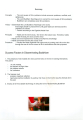
What does it mean to disseminate Buddhism ?
Dissemination of Buddhism
↓
The Lord Buddha’s Teachings
↓
Reside in the Mind of Every Individual
↓
Practice Them until They Become habits
The dissemination of Buddhism involves instilling the Lord Buddha’s teachings into the minds of individuals so they can practice these teachings as habits. Central to this process is the Noble Eightfo
28
Understanding the Root Causes of Life's Problems through Buddhism
Summary
Concepts - The root causes of life's problems include economic problems, conflicts, and defilements
- The Lord Buddha's Teachings aim to correct the root causes of life's problems
- Buddhism c
This text discusses the root causes of life's problems, including economic issues, conflicts, and mental defilements, proposing that the Teachings of the Lord Buddha offer comprehensive solutions. By
53
Embracing Meditation for Perfection
56. TO SUCCESSFULLY
PURSUE PERFECTIONS,
ONE NEED TO EMBRACE MEDITATION
We were born to pursue virtues. Strive to perform good deeds. If you wish to successfully pursue Perfections, you need to “attac
In the pursuit of Perfections, one must focus on mental development rather than attachment to people. Meditation serves as a vital practice to overcome false views and achieve personal merit. As exper
85
Conquer Mara with Goodness
127. CONQUER MARA WITH GOODNESS
Throughout my life I have done nothing but good deeds. I will keep doing so
to further the purity of my body, speech and mind. This goodness will help
me overcome the i
The text discusses the importance of maintaining purity in body, speech, and mind to overcome the negative influence of Mara. The author emphasizes making resolutions to stay on the path of goodness,
16
The Downfall of a Millionaire's Son
Here is the text extracted from the image:
Thereupon, taking his wife with him, he found lodging near the house-wall of other people’s houses. With a broken potsherd in his hand, he would go about be
This narrative explores the life of Great-wealth, a treasurer's son who wasted all his possessions and ended up begging for food. The Teacher explains to Ānanda how Great-wealth could have achieved gr
8
The True Nature of the Buddha's Enlightenment
the Buddha’s enlightenment dealt entirely with meditation focussed outside the body. Then, as now, almost all success was attributed to ideas and strategies — but as a result of countless past lifetim
Siddhattha Gotama's enlightenment was rooted in meditation that transcended mere conceptualization. He recognized that achieving true liberation demanded a harmonious blend of theory and inner virtue.
54
Understanding the Origin of Suffering in Buddhism
2.2 The Origin of Suffering as a Cause
In explaining the Origin of Suffering, the Buddha intended to make clear that the suffering experienced by living beings has craving as its cause. As soon as the
In this examination of the Buddha's teachings, the Origin of Suffering is explained as being rooted in craving, which leads to a cycle of suffering. The relationship between the Origin of Suffering an
76
Understanding the Aggregates of Clinging in Buddhism
attachment and can therefore lead to suffering. The reason that attachment to the Five Aggregates causes suffering is that they belong to the mundane world [lokiya] and are therefore referred to as ‘A
The Aggregates of Clinging plays a pivotal role in Buddhist teachings on suffering, highlighting how attachment to the Five Aggregates leads to various forms of suffering. While individuals reaching t
95
The Noble Truth of the Cessation of Suffering
The Noble Truth of the Cessation of Suffering
When the Lord Buddha had finished his explanation of the origin of suffering, he continued with an explanation of the cessation of suffering. The essence
This text explains the Buddha's teaching on the cessation of suffering, emphasizing the importance of extinguishing craving through the Noble Eightfold Path. It highlights that addressing the root of
107
परम ध्यान और आत्मा का केंद्र
(sleeps).
Luang Phaw Wat Paknam explained that the ability to bring our mind to a standstill at this centre of the body is what we call ‘majjhima’ or ‘centering’. When the mind comes to a standstill
लुआंग फॉ वट पाकनम ने समझाया कि शरीर के केंद्र पर ध्यान लाने की क्षमता को 'मध्यम' कहा जाता है। यह वह बिंदु है जहाँ मन सद्भाव में आता है, और इसे अच्छे या बुरे के संदर्भ में नहीं रखा जा सकता है। इसके द्व
117
The Noble Truth of the Cessation of Suffering
The Noble Truth of the Cessation of Suffering: A Conclusion
The Lord Buddha taught that the cessation of suffering can
be effected by extinguishing all craving through the prac-
tice of the Noble Eigh
The conclusion on the cessation of suffering according to the Buddha highlights the need to extinguish craving through the Noble Eightfold Path. Once craving is eliminated, suffering cannot return. Ou
178
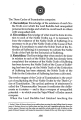
The Three Cycles of Examination in Buddhism
The Three Cycles of Examination comprise:
1. Saccānāna: Knowledge of the existence of each Noble Truth over which the Lord Buddha had unequaled personal knowledge and which he could teach to others wi
The Three Cycles of Examination define knowledge concerning the Noble Truths which the Lord Buddha taught. Saccānāna pertains to the knowledge of each truth’s existence; Kiccanānā addresses the necess
201
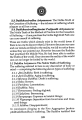
The Noble Truths of Suffering and Cessation
3.3 Dukkhanirodha Aryasacca: The Noble Truth of the Cessation of Suffering—the sickness of suffering which plagues us all has a cure;
3.4 Dukkanirodhagāminī Paṭipadā Aryasacca: The Noble Truth of the
The Noble Truths articulate the nature of suffering and its cessation. Dukkha encompasses various types of suffering including birth, aging, and death, as well as emotional pains like sorrow and disap
206
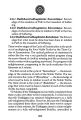
Knowledge of the Path to Cessation of Suffering
3.8.1 Dukkhanirodhagāminī Saccāṇa: Knowledge of the existence of Path to the Cessation of Suffering.
3.8.2 Dukkhanirodhagāminī Kiccaṇāṇa: Knowledge of what must be done in relation to Path to the Ces
This text discusses the twelve stages of the Cycle of Examination derived from the Four Noble Truths and their relation to enlightenment. It elaborates on the three circuits: knowledge of existence, k